

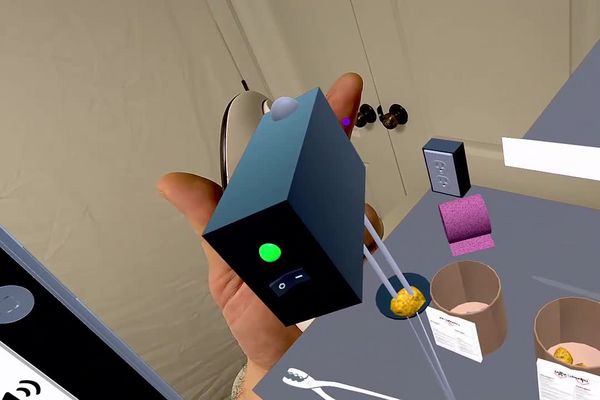
The periodic table is, before anything else, a summary of behaviour. Elements are placed where they are because of how they conduct, how they deform, and what they react with, and those same properties are what tell an engineer whether a material belongs in a wire, a heat sink, a structural beam or a battery. Distinguishing a metal from a non-metal from a metalloid is the first classification a chemist learns, and it is made not by looking up an answer but by testing.
Four physical properties and two chemical ones separate the classes. Metals conduct electricity because their outer electrons are delocalised and free to drift through the lattice; the same mobile electrons carry heat, give the surface its reflective lustre, and let the lattice planes slip past one another without breaking, which is malleability. Non-metals hold their electrons in localised covalent bonds and do none of these things. Metalloids sit between: silicon’s covalent lattice transmits heat as vibrations perfectly well but releases almost no charge carriers, which is exactly what makes it a semiconductor. Chemically, a metal above hydrogen in the activity series displaces it from acid, and the most reactive metals — the alkali and alkaline earth families on the left of the table — do so from water alone, leaving a hydroxide behind and therefore a strongly basic solution.
In this laboratory you will test ten elements. Five — zinc, sulfur, silicon, iron and lead — are examined for electrical and thermal conductivity, lustre, malleability and reaction with 1 M hydrochloric acid, and classified from the results. Five more — lithium, sodium, potassium, magnesium and calcium — are placed in distilled water, watched for effervescence, and tested with red and blue litmus paper to establish whether a base has formed. The completed results table is a small experimental version of the periodic table’s left-hand block.
Educational Goals
Familiarization with the laboratory environment
- Locate and use the equipment of a materials-testing bench: the electrical conductivity detector, tongs, emery paper, the two sets of beakers, the dropper and the litmus papers and pH chart.
Use of protective equipment and safe handling of reactive metals
- Wear gloves and eye protection, and handle every metal sample with tongs rather than by hand.
- Explain why alkali metals are added to water in small pieces and behind eye protection, and why 1 M hydrochloric acid requires the same care.
Testing physical properties
- Use the conductivity detector correctly, and abrade a sample with emery paper first so that surface oxide does not mask the metal beneath.
- Assess thermal conductivity, metallic lustre and malleability, and describe each observation in terms that another student could reproduce.
Testing chemical properties
- Observe the reaction of each of the five elements with 1 M hydrochloric acid and record whether hydrogen is evolved.
- Place the alkali and alkaline earth samples in distilled water, observe effervescence, and use red and blue litmus paper to determine whether the resulting solution is basic.
Classifying elements from evidence
- Assign each element to metal, non-metal or metalloid on the basis of the six tests rather than on its position in the table.
- Explain which single property is most diagnostic, and which observations on their own would be misleading.
Connecting behaviour to periodic trends
- Relate conductivity, lustre and malleability to delocalised electrons in a metallic lattice.
- Relate reactivity with acid and with water to position in the activity series and to the ease with which an atom loses its outer electron.
Recording and interpreting a results matrix
- Complete a ten-element by six-property table and read the trends across and down it.
- Identify the entries that require a qualifying note rather than a plain yes or no.
Protocol
Part A : The properties of metals, nonmetals and metalloids
Electrical conductivity
- Take the electrical conductivity detector (ECD) and turn it on.
- Take a zinc sample using the tongs.
- Place the ECD electrodes on the piece of zinc (make sure both electrodes are simultaneously in contact with the piece).
- Observe whether the ECD bulb lights up or not, the result is found in the results table.
- Repeat steps 2 to 4 with the pieces of sulfur, silicon, iron and lead.
Thermal conductivity
- Take a zinc sample using the tongs.
- Place the palm of your free hand on the piece of zinc. The result of the sensation to the touch is recorded in the results table.
- Repeat steps 1 and 2 with the pieces of sulfur, silicon, iron and lead.
Shine
- Take a zinc sample using the tongs.
- With the other hand, lightly rub the piece of zinc with emery paper to remove any trace of dirt or oxidation on one of its parts.
- Observe the rubbed area, the observation is found in the results table whether it shows a metallic shine or not.
- Place the piece in the recovery bin.
- Repeat steps 1, 2 and 3 with the pieces of sulfur, silicon, iron and lead.
Malleability
- Take a zinc sample using the tongs.
- With the other hand, take the bending pliers and try to bend the zinc sample.
- Note the malleability in the results table. If the piece bends slightly, it is malleable. If it breaks or does not bend , it is not malleable.
- Place the piece in the recovery bin.
- Repeat steps 1 to 4 with the pieces of sulfur, silicon, iron and lead.
Reaction to acid
- Place a piece of zinc, sulfur, silicon, iron and lead in each of the 50 mL beakers already identified by name.
- Using the dropper, draw up the hydrochloric acid solution (HCl 1 M) and pour a few drops onto the piece of zinc.
- Observe whether an effervescence reaction occurs (presence of small bubbles). The reaction will be noted in the results table.
- Repeat steps 2 and 3 with the pieces of sulfur, silicon, iron and lead.
Part B : The properties of alkali metals and alkaline earth metals
Reaction with water
- In the beakers identified lithium, sodium, potassium, magnesium and calcium, pour 50 mL of distilled water.
- Dip a piece of red litmus paper and a piece of blue litmus paper into each beaker to confirm the neutrality of the water used in the beakers.
A neutral medium will not change the color of the litmus papers.
- With the tongs, take a sample of the substances lithium, sodium, potassium, magnesium and calcium and place them in each of the 50 mL beakers (containing the distilled water) already identified by name.
Observe whether an effervescence reaction occurs (presence of small bubbles). The reaction will be noted in the results table.
- Dip again a piece of red litmus paper and a piece of blue litmus paper into each beaker.
Anticipated Outcomes
The completed results table. Six tests on ten elements. The five elements on the left of the table are tested with 1 M hydrochloric acid; the alkali and alkaline earth metals on the right are also tested with distilled water.
| Element | Zn | S | Si | Fe | Pb | Li | Na | K | Mg | Ca |
| Electrical conductivity | Yes | No | No | Yes | Yes | Yes | Yes | Yes | Yes | Yes |
| Thermal conductivity | Yes | No | Yes | Yes | Yes | Yes | Yes | Yes | Yes | Yes |
| Metallic shine | Yes | No | Yes | Yes | Yes | Yes | Yes | Yes | Yes | Yes |
| Malleability | Yes | No | No | Yes | Yes | Yes | Yes | Yes | No | No |
| Acid reaction | Yes | No | No | Yes | Yes | Yes | Yes | Yes | Yes | Yes |
| Reaction with water | No | No | No | No | No | Yes | Yes | Yes | No | Yes |
Reading the table. Electrical conductivity is the single most decisive column: only sulfur and silicon fail it, and everything that passes it also shows lustre. Malleability separates the set further — magnesium and calcium are brittle rather than malleable despite being unambiguous metals, a reminder that malleability depends on how the lattice planes are stacked, not merely on metallic bonding being present. Reaction with water is the column that isolates the two families on the far left: lithium, sodium, potassium and calcium react, magnesium does not appreciably at room temperature, and none of the five transition or post-transition samples does.
Why the metals conduct. In a metallic lattice the outer electrons are not bound to individual atoms but occupy delocalised states extending through the whole crystal. An applied voltage sets that electron sea drifting, which is electrical conduction; the same fast-moving electrons also carry kinetic energy from hot regions to cold, which is why good electrical conductors are almost always good thermal conductors, and they reflect visible light across the spectrum, which is metallic lustre. Because the bonding is non-directional, one plane of ions can slide over the next without the bonding being broken — hence malleability, provided the crystal structure permits the slip.
Silicon, the metalloid. Silicon is the instructive case. It conducts heat well — about 149 W/(m·K), better than iron — because heat travels through its rigid covalent lattice as vibrations, which need no free electrons at all. But those same covalent bonds hold every valence electron in place, so pure silicon carries almost no current: at room temperature only a vanishing fraction of electrons has enough energy to cross its band gap. Heat conduction by lattice vibration and charge conduction by mobile electrons are separate mechanisms, and silicon has one without the other. That is precisely the property that makes it a semiconductor and the basis of the entire electronics industry, since deliberately adding impurities raises its conductivity by orders of magnitude.
Sulfur, the non-metal. Sulfur is the only sample here that fails every test. Its molecules are discrete S8 rings held to one another by weak dispersion forces: no delocalised electrons, so no conduction and no lustre; no continuous lattice to slip, so it shatters rather than deforms; and no tendency to give up electrons to hydrogen ions, so no reaction with acid.
The best conductors are on the left. Counterintuitively, the alkali and alkaline earth metals outperform the familiar structural metals in this set. Calcium reaches about 3.0 × 10⁷ S/m and 201 W/(m·K), ahead of both iron and lead. They are not used as conductors for the obvious reason: they corrode or react on contact with air and water. Usefulness in engineering is a combination of properties, not a single one.
Reaction with acid. A metal displaces hydrogen from acid if it lies above hydrogen in the activity series, that is if its standard reduction potential is negative:
M(s) + 2 H+(aq) → M2+(aq) + H2(g)
Zinc (E° = −0.76 V) and iron (E° = −0.44 V) both give a steady stream of hydrogen bubbles. Lead is the entry that needs a qualification. Lead does react with hydrochloric acid — it lies above hydrogen, at E° = −0.13 V — but the reaction is very weak. The lead(II) chloride it forms is only sparingly soluble, roughly 10 g/L at room temperature, so it deposits on the metal almost at once and seals the surface: a few bubbles of hydrogen appear and the reaction then all but stops. Expect a faint, short-lived effervescence rather than the steady evolution seen with zinc or iron. The table records this as a yes, because a reaction does occur, but a student should note that it is a weak one and say why.
Reaction with water. The alkali metals and the heavier alkaline earth metals reduce water directly, releasing hydrogen and leaving a metal hydroxide in solution:
2 Li(s) + 2 H2O(l) → 2 LiOH(aq) + H2(g) and Ca(s) + 2 H2O(l) → Ca(OH)2(aq) + H2(g)
This is why the litmus test is part of the protocol and not an afterthought: the effervescence tells you hydrogen is being produced, and the litmus tells you what was left behind. Every element that reacts with water in this laboratory gives a solution with a pH above 12 — red litmus turns blue, blue litmus stays blue. Reactivity increases down group 1, because the outer electron is progressively further from the nucleus and more easily lost, so potassium reacts more vigorously than sodium and sodium more vigorously than lithium. Magnesium is the one negative in that column: its reaction with cold water is far too slow to see, although it proceeds readily with steam or with acid.
Summary of Assignment by Grade Range
Grade 9–10
- Focus: the properties that distinguish metals, non-metals and metalloids, and careful recording of observations.
- Activities: run all six tests on the ten elements and complete the results table; classify each of the five elements in the first group as metal, non-metal or metalloid and give the evidence; use red and blue litmus to say whether each water reaction produced a base; state which single test was most useful and why.
Grade 11
- Focus: metallic bonding as the explanation for the physical properties, and the activity series for the chemical ones.
- Activities: explain conduction, lustre and malleability in terms of delocalised electrons; write and balance the equations for the acid and water reactions; explain why silicon conducts heat but not electricity; order lithium, sodium and potassium by reactivity and justify the order from atomic structure; explain why magnesium reads as no in the water column but yes with acid.
Grade 12 / College Level
- Focus: band structure, electrode potentials, and the limits of a qualitative classification.
- Activities: account for the difference between a metal, a semiconductor and an insulator in terms of band gap, and explain why silicon’s conductivity rises with temperature while a metal’s falls; use standard reduction potentials to predict which of the ten elements should react with 1 M HCl, and compare the prediction with the observations; explain quantitatively why the lead reaction stops, using the solubility of PbCl2; calculate the pH expected from a stated mass of lithium reacting completely in a known volume of water; identify which entries in the table would change if the samples were not abraded, and design a test that would distinguish a slow reaction from no reaction at all.
Laboratory essentials
Instruments
- Electrical conductivity detector (DCE)
- Tongs
- Emery paper
- Beakers 50 mL ×5
- Beakers 100 mL ×5
- Dropper
- Red and blue litmus papers
- pH chart
- Paper towel
- Gloves and eye protection
Products
- Hydrochloric acid, HCl 1 M (solution)
- Distilled water
- Zinc (s)
- Sulfur (s)
- Silicon (s)
- Iron (s)
- Lead (s)
- Lithium (s)
- Sodium (s)
- Potassium (s)
- Magnesium (s)
- Calcium (s)